Garnet vs Ruby: Which Is Better for Rings?
Red gemstones have always carried weight — visually and symbolically. At Keeta Luxury, two of the questions we hear most from ring shoppers are some version of “is a garnet as good as a ruby?” and “which one should I actually buy?” They can look like cousins in a jewelry case, but garnet and ruby differ in chemistry, hardness, color, and price in ways that should shape your decision. This guide walks through all of it, so by the end you’ll know which red stone fits your budget, your lifestyle, and the look you’re after.
Garnet and Ruby at a Glance
What Is Garnet?
Garnet isn’t one mineral. It’s a family of silicate minerals that share a crystal structure but vary in composition, and people have set them in jewelry since the Bronze Age. The varieties include almandine, pyrope, spessartine, grossular and others. Red garnets — pyrope and almandine — are the famous ones, but the family also runs to green (tsavorite), orange (spessartine), yellow, and even color-change stones. Because garnet is mined widely, from India to Brazil to the United States, and in real quantity, it stays affordable and easy to find. That accessibility is a big part of why garnet jewelry, like the pieces in the Keeta Luxury garnet collection, gives you so much stone for your money.
What Is Ruby?
Ruby is a variety of corundum — aluminum oxide — turned red by trace chromium. Together with sapphire (corundum’s other color), emerald, and diamond, it’s one of the “big four” precious gemstones. Gem-quality rubies form in only a handful of places: Myanmar (Burma), Thailand, Sri Lanka, and parts of Africa. The finest, those Burmese “pigeon blood” rubies, are genuinely rare and priced accordingly. Ruby’s color sits in a narrow lane — pure red to slightly pinkish-red — with none of garnet’s range.
Quick Comparison Table
|
Feature |
Garnet |
Ruby |
|---|---|---|
|
Hardness |
Mohs 6.5–7.5 |
Mohs 9 |
|
Price |
Affordable; tens to a few hundred dollars/ct |
Expensive; thousands to tens of thousands/ct at top quality |
|
Rarity |
Common, widely available |
Rare, especially fine large stones |
|
Color range |
Broad (deep red, orange-red, green, more) |
Limited to reds and pinks |
|
Everyday wear |
Softer; better for occasional or protected wear |
Very hard; excellent for daily wear |
|
Symbolism |
Protection, friendship, commitment |
Passion, love, power, courage |
Garnet vs Ruby Color Differences
Color is usually the first thing anyone notices, and it’s where these two stones quietly part ways.
Ruby is prized for a vivid, pure red. The most coveted shade, “pigeon blood,” is a bright, slightly bluish-red with deep saturation. Rubies also turn up as pinkish-red or blood-red, and even the paler ones tend to stay lively and transparent. Under daylight or UV, fine rubies can fluoresce, which adds a faint inner glow. Their high refractive index and transparency are why a ruby reads as fiery.
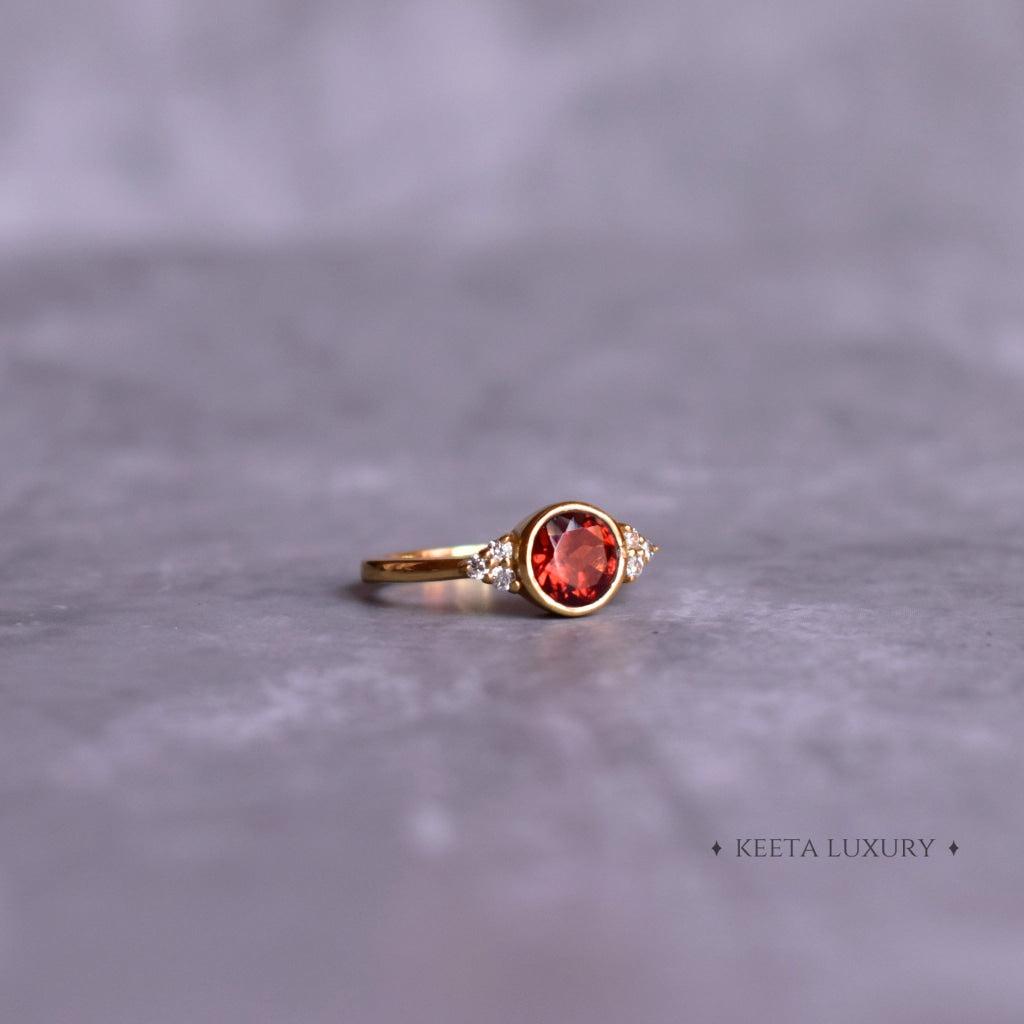
Red garnets run darker and earthier. Pyrope and almandine lean wine-red to brick-red, sometimes with orange or purplish undertones — a pyrope can look like warm pomegranate, a spessartine more orange. Garnets skip the pinkish tint some rubies have, so under certain light they can read brownish or amber. Put them side by side and ruby usually looks more brilliant, while garnet glows softly rather than flashing. Neither is “better.” It comes down to whether you want a jewel-bright red or a deep, velvety one.
Durability Comparison: Which Stone Lasts Longer?
Hardness matters more for rings than people expect, because rings take the most abuse of anything you wear. Ruby sits at 9 on the Mohs scale — one of the hardest gems there is, second only to diamond. Almost nothing in daily life can scratch it. Garnet ranges from 6.5 to 7.5, closer to quartz, so it’s durable but noticeably softer. In practice that means a garnet ring worn around the clock can pick up scratches over the years, while a ruby stays crisp.
This is why rubies get recommended for engagement rings and heirlooms meant to survive a lifetime of wear. Garnet is perfectly happy in a ring too — it just rewards a little care, like a protective bezel or halo setting, or being saved for dressier occasions rather than gardening and gym days.
Best Ring Styles for Each Gemstone
|
Lifestyle |
Best choice |
Why |
|---|---|---|
|
Daily wear (work, errands) |
Ruby |
Much harder, resists scratches |
|
Office or dress wear |
Either |
Both perform well in moderate use |
|
Active / outdoors |
Ruby |
Maximum durability |
|
Special occasions |
Garnet |
A great statement piece for less |
Garnet vs Ruby Price Comparison
Why Rubies Cost More
Rubies are far pricier than garnets, and it comes down to scarcity meeting demand. Fine untreated Burmese rubies with pure color and clean clarity are extremely rare, so top stones run from $5,000 to well over $50,000 per carat, with record rubies selling for millions. Even modest rubies of decent color land in the hundreds-to-thousands range. Buyers often treat a fine ruby as an asset that holds value.
Why Garnets Are More Affordable
Garnet is the value play. Most red garnets sit anywhere from a few dollars to a few hundred per carat, and even a high-grade stone rarely tops $50. Because garnets come in large sizes from many sources, you can get a striking 1–3 carat garnet ring for well under $500 — which means more stone, or a more elaborate setting, for the same budget. It’s exactly why so many shoppers browsing the Keeta Luxury garnet collection walk away with a bigger, bolder ring than they expected.
Garnet Bracelets: The Everyday Red Most People Overlook
Rings get all the attention in this debate, but bracelets are where garnet quietly shines. A bracelet sits lower on the body and takes fewer hard knocks than a ring, so garnet’s slightly softer nature is much less of a concern — you get that deep red color on your wrist without babying it the way you might a daily-wear garnet ring.
Garnet also stacks beautifully. Its warm, wine-red tone layers well with gold, beaded strands, and other gemstones, which makes it a natural fit for the kind of mix-and-match looks that are hard to pull off with a single expensive ruby piece. For most shoppers, a garnet bracelet delivers the richest color-per-dollar in the whole category. If that’s the look you’re after, you can browse the Keeta Luxury garnet bracelets to see how the stone reads across different settings and metals.
Symbolism and Meaning
Both stones carry meaning tied to love and protection, with different personalities.
Ruby has long stood for love, passion, power, and courage — its red read as the life force itself. Across cultures it was thought to bring fortune and guard against harm. As July’s birthstone, it’s also the traditional gift for 15th and 40th anniversaries, and a ruby ring tends to signal enduring love and vitality.
Garnet leans toward protection, loyalty, and friendship. Ancient travelers carried it as a talisman for safe passage, and it’s still seen as a stone of commitment and hope — which is why it’s a popular promise stone. As January’s birthstone, it speaks to new beginnings and resilience. If the symbolic side of the decision matters to you, it’s worth reading who should wear a garnet ring before you choose, since the stone suits some wearers more naturally than others.
Which Gemstone Offers Better Value?
Value depends entirely on what you’re optimizing for.
-
Luxury or investment collector: Ruby. For prestige, resale potential, and a true heirloom, nothing else competes.
-
Budget-conscious shopper: Garnet. You get a larger, more elaborate red ring for far less.
-
Vintage or unique-style lover: Garnet. Its earthy red and historic charm suit Art Deco, antique, and bohemian designs, and it’s less common in new fine jewelry, so it stands out.
-
Everyday wear: Ruby. If it’s going on your hand every single day, the durability is worth the splurge.
|
Buyer profile |
Best choice |
|---|---|
|
Luxury collector |
Ruby |
|
Budget shopper |
Garnet |
|
Vintage / unique style |
Garnet |
|
Investment-focused |
Ruby |
A ruby signals status and shrugs off hard wear. A garnet offers accessible beauty, more size, and a distinctive look. Pick the one that matches what you value most.
Garnet vs Ruby Ring Pros and Cons
|
Stone |
Advantages |
Disadvantages |
|---|---|---|
|
Garnet |
Affordable; excellent color-to-price ratio; many varieties; warm romantic red; almost always untreated |
Softer (6.5–7.5), can scratch; low resale value; less “prestige” |
|
Ruby |
Very hard (9) and durable; high brilliance; timeless prestige and investment value; symbol of passion |
Expensive at top color; narrow color range; often heat-treated |
How to Choose Between Garnet and Ruby
A few questions usually settle it. Be honest about your budget first — even a small fine ruby can cost as much as a much larger garnet. Then your lifestyle: daily-wear ring leans ruby, occasional piece leans garnet. If long-term value matters, ruby is the safer hold. If personal style rules — and for a lot of our customers it does — let the color and vibe decide, whether that’s ruby’s bright fire or garnet’s deep, vintage red. And don’t ignore symbolism, especially if one of these is your birthstone.
Ask yourself five things before buying:
-
How much can I spend on the stone itself?
-
Will the ring be worn daily or only occasionally?
-
Do I care about investment-grade quality?
-
Do I want a unique vintage color or a classic bright red?
-
Does the birthstone or symbolism matter to me?
The Takeaway
Neither stone is objectively better — the right answer in the garnet vs ruby debate is the one that fits your hand and your budget. Ruby wins on durability, prestige, and resale, which makes it ideal for engagement rings and heirlooms. Garnet wins on price, color variety, and character, giving you a bigger, bolder red piece for far less. At Keeta Luxury, we’d point everyday-wear and investment shoppers toward ruby, and anyone after rich color, vintage charm, or value toward garnet — whether that’s a garnet ring or a garnet bracelet. Either way, you end up with a stunning red stone.
Frequently Asked Questions
Can garnet be mistaken for ruby?
Yes. To the naked eye, many red garnets and rubies look alike, especially in small sizes. Gemologists tell them apart by color tone — garnet often shows orange flashes, ruby shows purplish or bluish undertones — and by testing. Ruby has a higher refractive index and frequently fluoresces under UV light, while garnet usually doesn’t.
Is ruby worth the extra cost?
It depends on your priorities. Rubies cost more because they’re rarer and harder. If you want a luxury gem that lasts a lifetime and may hold its value, the premium is justified, especially for daily wear and heirlooms. If your budget is tighter or you want a large, vivid red stone, garnet is a beautiful, far more affordable alternative.
Which gemstone scratches more easily?
Garnet. At a Mohs hardness of 6.5–7.5, it can be scratched by harder materials like quartz, topaz, or steel. Ruby, at hardness 9, resists nearly everything except diamond, so a ruby ring stays looking crisp far longer under daily wear.
Can garnet be used in engagement rings?
Yes. Garnet works in engagement and promise rings, particularly if you love its color or symbolism. It’s reasonably durable at up to 7.5 on the Mohs scale, but it’s softer than ruby, so choose a protective setting like a bezel or halo and avoid rough wear. Many people wear garnet engagement rings for years; just expect to re-polish it sooner than you would a ruby.
Does garnet have resale value?
Not much. Garnet is common, so it doesn’t hold high market value — you’d typically recover only a small fraction of the purchase price, mostly the metal. Fine rubies have far stronger resale and investment value. If resale matters, choose ruby; if beauty and sentiment matter, garnet is a wonderful choice.