Amethyst vs Blue Topaz: Which Jewelry Looks Better?
Table of contents
Choosing between amethyst and blue topaz feels harder than it should. Both stones are beautiful. Both are easy on the wallet compared to sapphires or emeralds. And both look stunning when set well. So the real question isn't which gem is "better" in some absolute sense, but which one suits your style, your skin tone, and how you actually plan to wear it. This guide breaks down the amethyst vs blue topaz debate across color, durability, price, and jewelry styles, so you can pick with confidence at Keeta Luxury.
Quick Comparison: Amethyst vs Blue Topaz at a Glance
Before getting into the details, here's how the two stones stack up side by side. Most shoppers ask the same five or six questions, and a quick reference clears up the basics in about ten seconds.
Side-by-Side Comparison Table
|
Feature |
Amethyst |
Blue Topaz |
|---|---|---|
|
Color range |
Lavender, lilac, deep violet |
Sky blue, Swiss blue, London blue |
|
Hardness (Mohs) |
7 |
8 |
|
Price per carat |
Moderate; rises with deeper color |
Generally lower than amethyst |
|
Popular jewelry types |
Rings, bracelets, pendants |
Engagement rings, cocktail rings, drop earrings |
|
Birthstone month |
February |
November (also December accent) |
|
Best skin tones |
Warm and neutral undertones |
Cool and neutral undertones |
Who Should Choose Each Gemstone?
Fashion buyers who rotate looks weekly tend to gravitate toward amethyst because purple plays nicely with both warm gold and cool silver settings. Luxury buyers usually lean amethyst too, especially in deeper Siberian-style violets that carry a richer, more regal feel. Budget shoppers and anyone wanting maximum sparkle for the price almost always end up loving blue topaz. It punches well above its price tag, particularly in the Swiss blue and London blue cuts.
Color & Appearance Differences
Color is where this whole debate really lives. The two gems sit on opposite sides of the color wheel, and that single fact decides most purchases.
Amethyst's Royal Purple Appeal
Amethyst ranges from soft lavender to deep, inky violet. The lighter shades feel romantic and feminine. The deeper ones carry centuries of association with royalty, the church, and old-money jewelry boxes. There's a reason vintage estate pieces are full of amethyst — it photographs beautifully, ages well, and never looks dated. A well-cut amethyst in white gold or rose gold has a slow, deep glow rather than a flashy sparkle. That subtlety is the point.
Blue Topaz's Bright Oceanic Sparkle
Blue topaz comes in three popular shades. Sky blue is pale and airy, almost aquamarine-like. Swiss blue is the bright, vivid blue most people picture when they hear "blue topaz." London blue is deeper, almost teal, with a moody, sophisticated edge. Blue topaz also has excellent clarity and brilliance — it throws light. Where amethyst glows, blue topaz sparkles.
Which Gemstone Gets More Compliments?
This depends entirely on your wardrobe. Blue topaz tends to draw immediate "oh wow" reactions because of its brightness, especially in summer. Amethyst gets the slower, more considered compliments — the kind people give when they actually stop to look at your ring. Trend-wise, blue topaz has had a strong run for engagement rings recently, while amethyst remains the steady favorite for layered necklaces and birthstone pieces. Both work across seasons, but blue topaz feels more spring/summer, and amethyst leans autumn/winter.
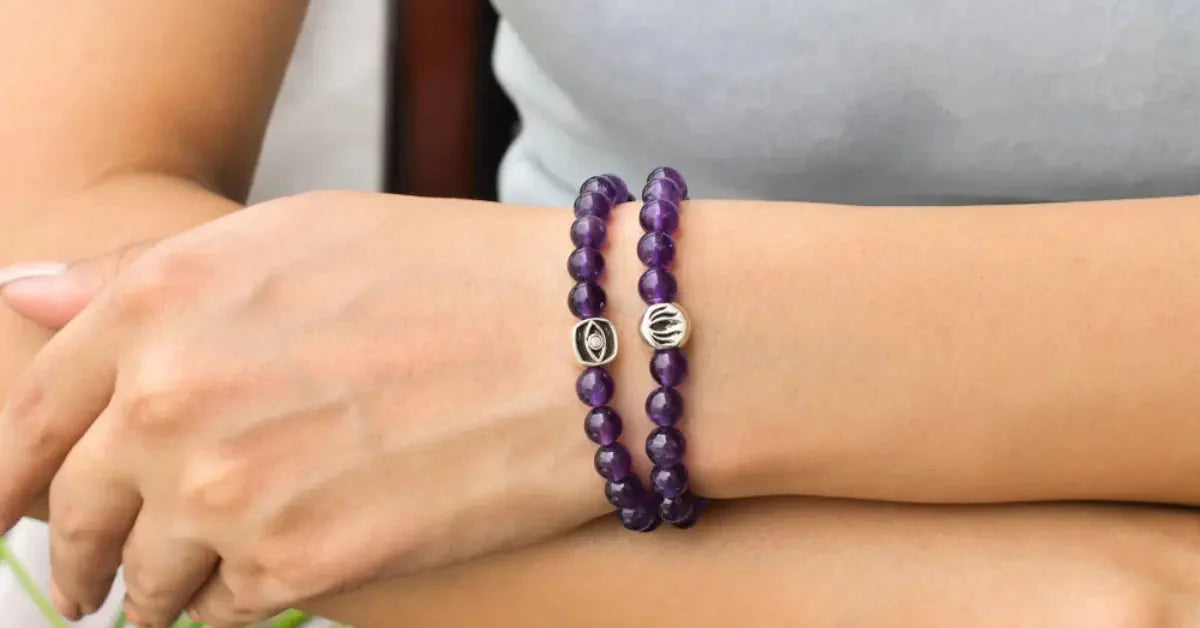
→ Shop amethyst bracelets at Keeta Luxury to see purple gemstone styling in person.
Which Gemstone Looks Better in Different Jewelry Types?
The "better" stone changes depending on what you're buying. Here's the breakdown by piece.
Rings
For engagement rings, blue topaz wins on visual impact for the budget. A 2-carat London blue topaz solitaire commands attention and costs a fraction of a sapphire. Amethyst engagement rings exist and look gorgeous, but they're more of a non-traditional pick — perfect if you want something nobody else has. For cocktail rings, amethyst is the classic choice; the deep violet against gold reads "evening." For everyday rings, amethyst's slightly softer hardness is worth keeping in mind, though both stones hold up fine with normal wear.
Necklaces & Pendants
Both stones photograph beautifully against the skin. Amethyst tends to read better on warm or olive skin tones because purple sits opposite yellow on the color wheel and creates contrast. Blue topaz pops against fair, cool-toned skin. For layering, blue topaz is easier — its color plays well with both gold and silver chains, and it doesn't fight with other gemstones nearby. Amethyst layers best with diamonds, pearls, or other purple-family stones.
Earrings
Blue topaz reflects more light, so it's the better pick for drop or chandelier earrings where movement matters. Amethyst suits stud earrings and halo designs where depth of color does the heavy lifting. For face shape, faceted blue topaz briolettes flatter rounder faces, while oval amethyst studs elongate the face subtly.
Bracelets
A tennis bracelet of alternating blue topaz and diamond accents reads modern and bright. An amethyst bracelet — particularly with rose gold links — leans warmer and more vintage. If you wear bracelets every day, amethyst pairs effortlessly with most outfits because purple is surprisingly neutral. You can read more about the amazing benefits of an amethyst bracelet if you're curious about the metaphysical side too.
Durability & Everyday Wear Comparison
If you're buying jewelry you'll actually wear, durability matters.
Mohs Hardness Comparison
Amethyst sits at 7 on the Mohs hardness scale. Blue topaz sits at 8. That one-point difference matters more than it sounds — the Mohs scale isn't linear. Blue topaz is genuinely harder and more scratch-resistant than amethyst, though both are perfectly suitable for jewelry.
Scratch Resistance & Maintenance
Clean either stone with warm water, a drop of mild dish soap, and a soft brush. Avoid ultrasonic cleaners for both. Amethyst can fade slightly with prolonged sun exposure, so don't leave it sitting in a sunny window for months. Blue topaz handles light better but is more prone to chipping along its cleavage planes if you knock it against something hard.
Best Choice for Daily Jewelry
For someone with an active lifestyle who wears their jewelry to the gym, in the shower, and through everyday knocks, blue topaz holds up slightly better. For someone who treats their jewelry more carefully and takes it off before workouts, amethyst is perfectly durable and will last generations. There are also a few situations where certain people should avoid wearing amethyst for personal or astrological reasons worth knowing about.
Price Comparison: Which Gemstone Offers Better Value?
Both gems are considered affordable compared to the "big four" (diamond, ruby, sapphire, emerald), but there's a real gap between them.
Why Blue Topaz Is Usually More Affordable
Blue topaz is abundantly available and most blue topaz on the market today has been heat-treated from colorless or pale topaz — a standard, accepted treatment that doesn't reduce its appeal. That supply abundance keeps prices reasonable.
Is Amethyst Worth Paying More For?
If you want a stone with deep historical weight, a slow-glowing color that ages gracefully, and luxury associations, yes — amethyst earns its slightly higher price. If you want maximum visual impact for the lowest spend, blue topaz wins on pure value.
→ Compare both side by side: browse Keeta Luxury's blue topaz jewelry collection.
Best Gemstone Based on Personal Style
Best for Minimalist Fashion
Blue topaz in clean, bezel-set designs. The brightness adds a single point of color to an otherwise neutral wardrobe without overwhelming it.
Best for Vintage & Regal Looks
Amethyst, every time. Especially in milgrain settings, halo designs, or estate-style cocktail rings.
Best for Modern Luxury
Either stone works, but London blue topaz in white gold has the most "of-the-moment" feel. Amethyst in yellow gold reads as quietly expensive in a way that's hard to fake.
Best for Gifts & Birthstones
Amethyst for February birthdays, blue topaz for November (and as a December alternative to traditional turquoise). Both stones are universally flattering, which makes them safe picks when you're shopping for someone whose taste you only half-know.
Amethyst vs Blue Topaz: Final Verdict
Choose Amethyst If…
You want a warm, deep, classically elegant gem. You love vintage-inspired pieces. You have warm or neutral skin tones. You're shopping for a February birthday or a piece with meaning.
Choose Blue Topaz If…
You want sparkle and brightness at an honest price. You prefer cool-toned jewelry. You're shopping for a non-diamond engagement ring with serious presence. You want a stone that holds up to daily wear without much fuss.
Best Overall Recommendation
Honestly, most people end up owning both. They serve different moods. If you have to pick one to start, blue topaz delivers more visual impact per dollar — but amethyst is the piece you'll keep wearing in twenty years.
Browse the full Keeta Luxury gemstone collection to see both side by side.
FAQs
Is amethyst more expensive than blue topaz?
Yes, in most cases. Commercial amethyst usually costs more per carat than commercial blue topaz, and the gap widens for deeper, more saturated amethyst stones. Blue topaz is more abundantly available and benefits from a widely accepted heat treatment that keeps supply high and prices reasonable. For comparable carat weights and quality, expect amethyst to run roughly 30–50% more than blue topaz.
Which gemstone sparkles more?
Blue topaz sparkles more. It has higher brilliance and clarity than amethyst, which gives it that flashy, light-throwing quality, especially in faceted cuts. Amethyst has a deeper, slower glow rather than bright sparkle. If you want a gem that catches the eye from across a room, blue topaz wins. If you want a gem that rewards a closer look, amethyst.
Is blue topaz good for everyday wear?
Yes. At a Mohs hardness of 8, blue topaz is durable enough for daily wear in rings, earrings, and pendants. Avoid hard knocks against surfaces, since blue topaz can chip along its cleavage planes if struck. Clean it occasionally with warm soapy water and a soft brush, and it'll stay beautiful for decades.
Which gemstone is more popular for gifts?
Amethyst, slightly. Its February birthstone status, deep symbolic associations with peace and clarity, and universally flattering color make it a safer gift pick. Blue topaz is rising fast though, particularly for non-traditional engagement rings and gifts to people who prefer cool-toned jewelry.
Can amethyst and blue topaz be worn together?
Absolutely. Purple and blue are adjacent on the color wheel, so they harmonize naturally. Layered pendants in both stones look striking against a simple top, and a stacked ring combination of an amethyst band with a blue topaz solitaire reads modern and intentional. The trick is to keep the metal consistent — both in white gold, both in yellow gold — so the stones do the talking.