How to Tell if a Pyrite Bracelet Is Real or Fake
Table of contents
Pyrite earned the nickname ‘Fool’s Gold’ for a reason — it has fooled people for centuries. Today the trickery has moved online, where painted brass beads and glittery resin get sold as the real stone of wealth and protection. If you bought a pyrite bracelet for its money-drawing reputation, a fake gives you the look and none of the substance.
So how do you tell if a pyrite bracelet is real or fake? This guide walks you through six quick checks you can do at home, the one lab-grade test most blogs skip, a real-vs-fake comparison table, and how to buy genuine pyrite bracelets without second-guessing every bead.
The fastest check: real pyrite is brassy gold with a soft metallic shine and feels surprisingly heavy for its size. If your bracelet is bright spray-gold, sheds glitter on your fingers, or feels light and hollow, it’s almost certainly painted brass or resin — not pyrite.
Why Fake Pyrite Bracelets Are Everywhere
Pyrite is cheap to fake and easy to sell. Because so many people wear it for Vastu, wealth, and confidence — the same reasons it’s become one of the most popular money magnet bracelets — demand far outstrips honest supply, and that gap gets filled with imitations.
Most fakes fall into three buckets, and the same red flags show up across most stones, which is why it pays to know how to identify genuine gemstones in general:
Painted or plated brass — metal beads coated to look bright gold.
Resin or plastic glitter beads — lightweight and shiny, glitter rubs off.
Chalcopyrite or other minerals — cheaper look-alikes passed off as pyrite.
A Myth to Clear Up First: Bright Gold Doesn’t Always Mean Fake
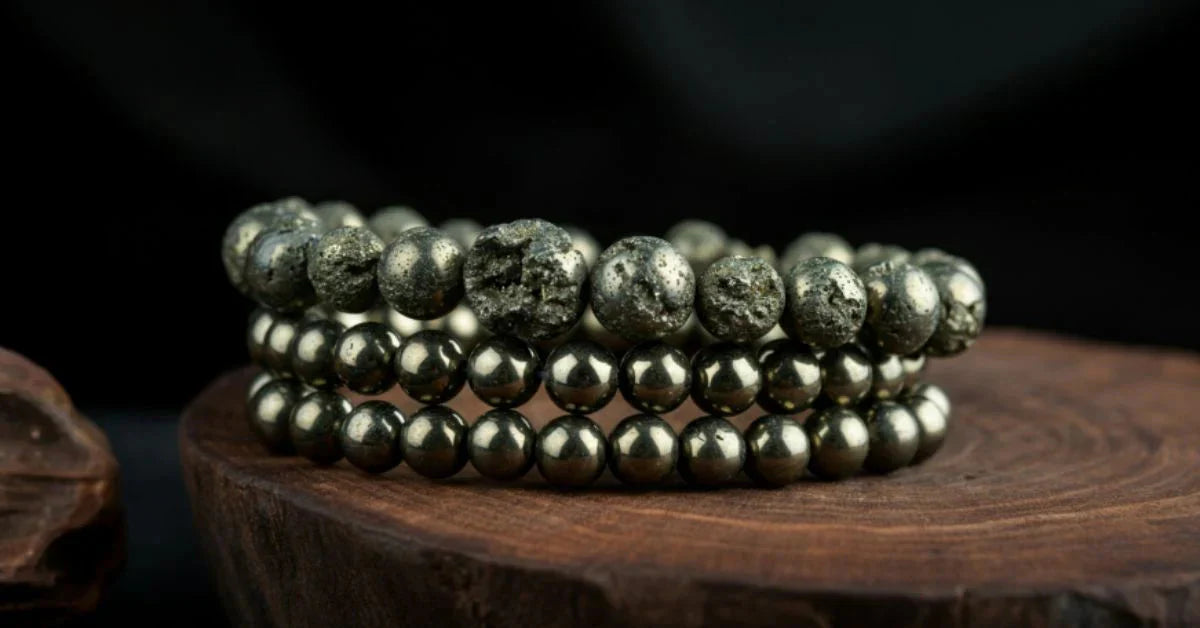
You’ll see crystal blogs claim ‘real pyrite is dark gunmetal, so anything gold is fake.’ That’s not quite right. Natural pyrite is genuinely a brass-yellow, pale-gold mineral with a metallic luster — that’s textbook mineralogy.
The real giveaway isn’t the colour, it’s the finish. A fake looks like sprayed-on gold paint or loose glitter; real pyrite has a deeper, slightly uneven metallic glow and tiny natural surface marks. Judge the surface and weight, not the shade.
6 Simple Ways to Tell if a Pyrite Bracelet Is Real
No single test is final. Run two or three together and a fake will fail at least one.
1. The Weight Test
Pyrite is dense — its specific gravity runs about 4.9 to 5.0, far heavier than plastic or resin. Cup the bracelet in your palm. Real pyrite feels solid and substantial; a fake feels light, even hollow.
2. The Surface and Glitter Test
Run your thumb over the beads. Genuine pyrite has a slightly grainy metallic surface with small natural marks. If glitter flakes off onto your skin or the shine looks sprayed on, it’s a coated fake.
3. The Streak Test
This is the one most guides skip, and it’s the most reliable. Rub the stone firmly across the back of an unglazed ceramic tile. Real pyrite leaves a greenish-black to brown-black powdery streak. A painted-brass fake leaves a gold mark or nothing at all.
4. The Scratch (Hardness) Test
Pyrite sits at 6 to 6.5 on the Mohs scale and will scratch glass without chipping. If a hidden bead scratches easily, dents, or flakes under a needle, you’re probably holding metal or resin.
5. The Magnet Test
Real pyrite is weakly magnetic, so a strong magnet may show a faint pull. Plastic and resin fakes show none. Treat this as a supporting clue rather than proof on its own.
6. The Tarnish Clue
Pyrite is iron sulfide, so over time and with moisture it can tarnish or develop tiny rust spots. A bead that stays flawlessly shiny forever, no matter what, may not be real pyrite at all.
Real vs Fake Pyrite — Quick Comparison
|
What you check |
Real Pyrite |
Fake (Brass / Resin / Glitter) |
|
Colour |
Brassy / pale gold with a soft metallic glow |
Bright spray-gold or painted yellow |
|
Weight |
Very heavy and dense for its size |
Light, hollow, plastic-like |
|
Surface |
Slightly grainy, tiny natural marks |
Glitter that rubs off on your fingers |
|
Streak (on tile) |
Greenish-black to brown-black |
Golden-yellow, or no streak |
|
Hardness |
Scratches glass (Mohs 6–6.5) |
Scratches easily, dents, or chips |
|
Shape / beads |
Slight variation bead to bead |
Identical, flawless, mirror-perfect |
Price Sanity Check
What’s a fair price? Pyrite is one of the more affordable stones, but real pyrite still isn’t free. When a ‘pyrite’ bracelet is priced far below the market or pushed with a too-good-to-be-true discount, it’s usually painted brass or resin. Check our pyrite bracelet price in India guide for current ranges, and treat rock-bottom pricing as a warning rather than a deal.
How to Buy an Authentic Pyrite Bracelet
The simplest way to skip every test above is to buy from a seller who guarantees authenticity. Look for natural, untreated stone, transparent sourcing, and proper certification.
This is where buying well beats testing. Keeta Luxury crafts pyrite bracelets from natural, genuine stone backed by GJEPC certification — so you get confirmed real pyrite, not painted brass. If you’d rather not run a streak test on every purchase, start with our guide to the best pyrite bracelet, and read up on the astrological benefits of pyrite once you know yours is the real thing.
The Takeaway
Telling if a pyrite bracelet is real or fake comes down to weight, surface, and one tile. Heavy and brassy with a greenish-black streak is the real thing; light, glittery, and spray-gold is not. And remember the colour myth — it’s the painted finish that betrays a fake, not the gold shade itself. If you’d rather buy with zero doubt, choose a certified, natural pyrite bracelet from Keeta Luxury, and check who should and shouldn’t wear pyrite before you wear it daily.
Frequently Asked Questions
Is real pyrite bright gold or dark?
Real pyrite is a brassy, pale-gold colour with a soft metallic shine — not the bright spray-gold of a painted fake. Ignore the myth that all gold-coloured pyrite is fake; natural pyrite genuinely looks brass-yellow. The giveaway of a fake is glitter that rubs off, not the colour itself.
What is the most reliable test for real pyrite?
The streak test. Rub the stone on the back of an unglazed ceramic tile: real pyrite leaves a greenish-black or brown-black powder, while painted-brass fakes leave a gold mark or none at all. It works because powder shows a mineral's true colour, which paint can’t fake.
Can a real pyrite bracelet go in water?
No. Pyrite is iron sulfide, so prolonged water exposure makes it rust and tarnish over time. This is also a quiet authenticity clue — a stone that never tarnishes at all may not be real pyrite. Clean it with a dry, soft cloth instead.
Does real pyrite spark?
Yes. Pyrite’s name comes from the Greek for ‘stone that strikes fire’ because it sparks when struck against steel. You won’t test a finished bracelet this way, but it’s a fun marker of the genuine mineral.
How much should a real pyrite bracelet cost in India?
Genuine pyrite is affordable but not dirt cheap. Suspiciously low prices usually mean painted brass or resin. See our pyrite bracelet price guide for current ranges before you buy.
Is pyrite magnetic?
Real pyrite is weakly magnetic and may show a faint pull from a strong magnet. Most plastic or resin fakes show none at all, so it’s a handy secondary check.